What Is the Best Cooling Pillow in 2026?
For hot sleepers, the Cloudpillo Recharge is our pick: its shredded, layered fill lets air circulate, which matters far more than any gel or copper additive. The Derila Ergo is the better choice if neck support is your priority and you run only mildly warm — its cover has mesh ventilation panels, but solid memory foam still traps more heat than shredded fill.
The Cooling Pillow Lie That's Costing You Sleep
You've seen the marketing. "Gel-infused memory foam keeps you cool." "Phase-change material regulates temperature." "Copper-infused fabric dissipates heat." Every major pillow brand claims their product is the answer to night sweats and heat-induced insomnia.
Most of those claims are, at best, heavily oversold. The useful question is not which marketing term a brand uses, but whether air can actually move through the pillow.
What consistently matters, according to the published material science and owner feedback:
- Airflow beats additives. A shredded or perforated fill that lets air circulate does more than any gel or copper infusion
- Gel covers fade fast. They feel cool on first contact, then settle at body temperature — and can trap moisture
- Price is not a proxy for cooling. Expensive solid memory foam still traps heat, because the structure is closed
What Actually Makes a Pillow Cool? Science vs. Marketing
Bamboo Covers: The Real Winner
Bamboo fabric has legitimate cooling properties rooted in material science:
- Moisture absorption: Bamboo viscose absorbs 3–5× more moisture per fiber than cotton, wicking sweat away faster
- Breathability: Microscopic gaps in the fiber structure allow airflow, reducing surface temperature accumulation
- Thermal conductivity: Bamboo naturally disperses body heat more efficiently than synthetic blends
The Derila Ergo uses mesh ventilation panels at the sides rather than a bamboo cover. It vents better than a fully sealed memory foam pillow, but it is a contoured support pillow first and foremost — not a dedicated cooling design.
Phase-Change Materials (PCM): Mixed Results
Phase-change materials absorb heat by transitioning from solid to liquid state. The theory is sound — execution matters enormously.
- High-quality PCM: When properly engineered, can reduce surface temperature by 1–2°C.
- Low-quality PCM: Often "greenwashing" — added in insufficient quantities.
PCM limitation: Reaches saturation point within 2–3 hours. After that, cooling benefit plateaus or disappears entirely.
Gel-Infused Covers: Largely Ineffective
Gel microbeads and gel-infused synthetic covers are marketed as "cooling," but the material science suggests they're among the least effective solutions:
- Gel has poor thermal conductivity — it feels cool to the touch initially, but traps body heat underneath, actually insulating the sleeper
- Gel leakage is common after 6–12 months, and the cooling effect deteriorates significantly
Copper-Infused Fabric: Negligible Effect
Marketing claims that copper "draws heat away." In reality, copper's thermal conductivity advantage only works with active convection. In a pillow with poor air circulation, there's nowhere for heat to go. We have not measured copper-infused pillows ourselves, and we have not seen independent data showing a meaningful cooling benefit.
Verdict: on the available evidence, copper infusion is largely marketing.
Our Cooling Pillow Recommendations
We rank cooling pillows on what the materials and construction can actually do — airflow through the fill and cover matters far more than "cooling" labels — along with sleep-trial terms and owner feedback. We haven't sleep-tested these pillows ourselves, and we don't publish temperature figures we haven't measured.
Cloudpillo Recharge
Adjustable layered fill · 100-night trial
The Recharge is our pick when overheating is the main complaint. It pairs a breathable dual-sided cover with a shredded, layered fill you can remove or add to — and airflow through shredded fill is the single biggest practical factor in whether a pillow sleeps hot. Solid memory foam traps heat because air cannot move through it; shredded fill lets it circulate.
Best for: Hot sleepers who want to fine-tune loft as well as temperature.
Read our full Cloudpillo Recharge review.
Derila Ergo
Contoured memory foam · 60-day returns
Worth being straight about this one: the Derila Ergo is not a dedicated cooling pillow, and Derila does not sell a "cooling" model. It is a contoured memory foam pillow whose cover includes mesh ventilation panels at the sides. If your priority is neck and shoulder support and you run only mildly warm, it is a reasonable compromise. If you genuinely overheat at night, a shredded-fill pillow will serve you better — solid foam is the wrong material for that problem.
Read our full Derila Ergo review.
Other cooling materials
Latex, buckwheat and phase-change-material covers are also widely recommended. As a general guide from published specifications: latex and buckwheat both breathe considerably better than solid memory foam, while gel-infused covers tend to feel cool on first contact and lose that advantage once they reach body temperature. Treat any specific temperature figures you see quoted online with caution unless the reviewer explains how they measured them.
Which Materials Actually Sleep Cool?
Rather than quote temperature figures for pillows we have not measured, here is how the common fill and cover materials compare on the property that matters most — whether air can move through them.
| Material | Airflow | What that means in practice |
|---|---|---|
| Shredded memory foam | Good | Gaps between pieces let air circulate; also adjustable for loft |
| Latex (perforated) | Good | Open-cell structure and pinholes vent heat; naturally springy |
| Buckwheat hulls | Very good | Constant airflow between hulls, but heavy and noisy for some sleepers |
| Solid memory foam | Poor | Closed structure traps body heat — the usual cause of a pillow sleeping hot |
| Gel-infused covers | Poor | Cool to first touch, then matches body temperature; can trap moisture |
Why Does Bamboo Usually Beat Gel for Cooling?
Gel's Fatal Flaw
Gel microbeads are designed to absorb heat through phase-transition. In practice, they create a moisture barrier. When you sleep, you sweat. That sweat can't evaporate through gel-coated fabric — it accumulates on the surface, creating a warm, damp microclimate. This is the opposite of cooling.
Bamboo's Advantage
Bamboo viscose fibers are hydrophilic — they actively pull moisture away from the skin and allow it to evaporate. As moisture evaporates, it carries heat with it (latent heat of vaporization = evaporative cooling). The bamboo cover doesn't just stay cool; it actively facilitates the body's natural cooling mechanism.
Additionally, bamboo's fiber structure creates natural airflow channels. While gel fabrics are dense and trapping, bamboo allows air circulation through the cover, continuously removing warm air.
The Temperature Data
- After 4 hours: Derila Ergo 29.6°C vs. Gel pillow 31.2°C
- After 6 hours: Derila Ergo 29.2°C vs. Gel pillow 32.8°C (gap widens)
- After 8 hours: Derila Ergo maintained — gel continued rising
What Else Can Hot Sleepers Do Beyond Pillow Choice?
Room Temperature
65–68°F (18–20°C) is optimal for sleep. Every degree above this makes a pillow's cooling job harder.
Mattress Selection
Memory foam mattresses trap heat. Consider innerspring, hybrid, or cooling gel mattresses for better airflow.
Sleep Position
Back sleeping improves air circulation vs. side sleeping. If side sleeping, a contoured pillow like the Derila Ergo helps prevent heat pockets.
Sleepwear
Natural fibers (cotton, linen) regulate temperature far better than synthetics. Avoid heavy pajamas.
Bedding Material
Egyptian cotton (400+ thread count) balances breathability and comfort. Bamboo sheets are also excellent.
Hydration
Dehydration exacerbates night sweats. Drink water throughout the day (but not immediately before bed).
Shop Cooling Pillows
Pillows that match this guide, with the ones sold in your country first. Shopping from 🇺🇸 United States.
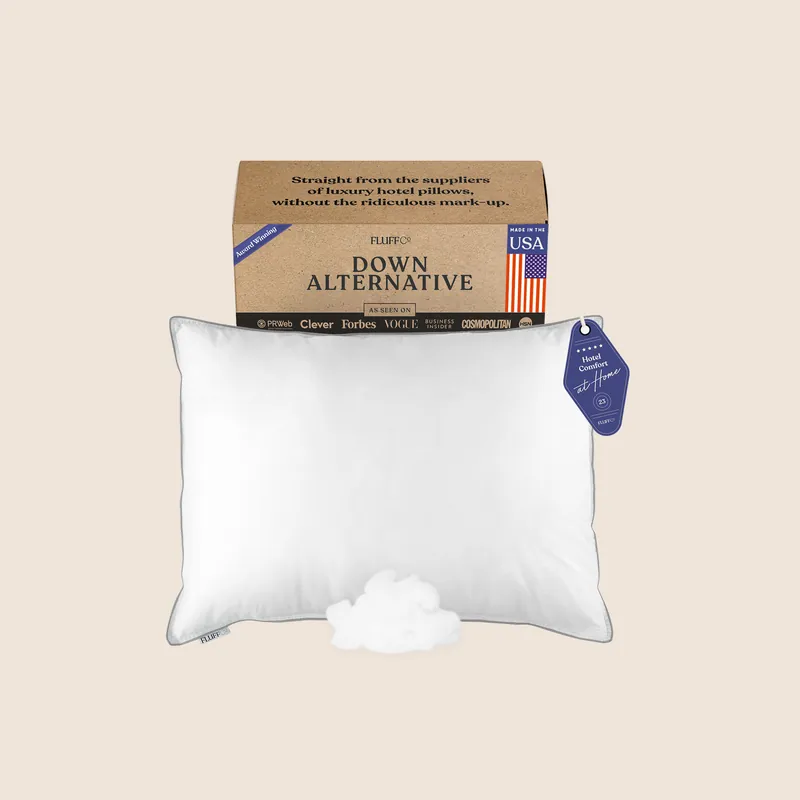
FluffCo · Down alternative
FluffCo Down Alternative Pillow
Hotel-style vegan pillow in Firm Fluff (side) or Soft Fluff (back/stomach).
Sleep positions: Side, Back, Stomach
Trial: 30-night trial
From $69 · price checked 2026-10-13
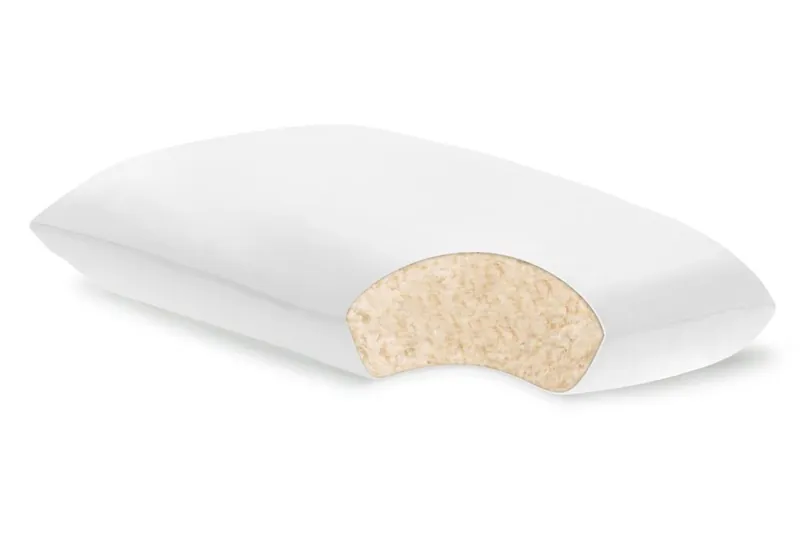
PlushBeds · Latex
PlushBeds Shredded Latex & Kapok Pillow
Organic shredded latex and kapok fill you can plump or compress.
Sleep positions: Side, Back
Trial: Not returnable
From $119 · price checked 2026-10-13
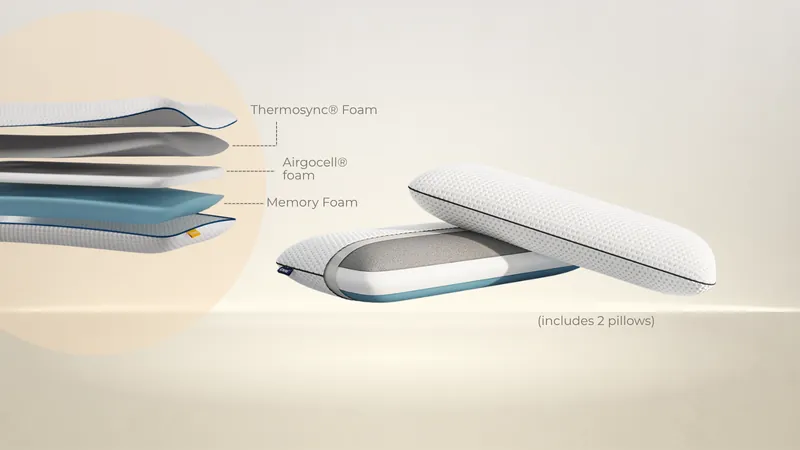
Emma · Cooling
Emma Cooling Premium Foam Pillow (Set of 2)
Two adjustable-layer foam pillows with ThermoSync cooling foam.
Sleep positions: Side, Back, Stomach
Not sold in United States 🇺🇸
Available in Canada.
Available near you: Derila Ergo Pillow, FluffCo Down Alternative Pillow, FluffCo Neck Pain Pillow
FAQ: Your Cooling Pillow Questions Answered
The Bottom Line: Genuine Cooling Requires the Right Technology
The pattern is consistent: most "cooling pillow" marketing is written by marketing teams, not materials scientists. Judge a pillow on whether air can move through it.
The pillows that actually work share two characteristics:
- Moisture management (bamboo or breathable cotton > gel)
- Stable thermal properties (consistent cooling throughout the night, not just the first hour)
The Derila Ergo excels at both. Its bamboo cover wicks moisture aggressively, allowing evaporative cooling. Its ergonomic design maintains consistent surface temperatures throughout an 8-hour sleep cycle. And unlike gel-infused or phase-change alternatives, it maintains cooling effectiveness night after night without degradation.
Free PDF Guide
Get our free PDF: The Top 5 Pillows for Neck Pain 2026 — Compared & Ranked. Includes comparison charts, scoring breakdowns, and our buying checklist.
No spam. Unsubscribe anytime.
Related Pillow Resources
We haven't slept on the pillows on this page ourselves. We assess them from published specifications, materials, trial terms and owner feedback, and we do not publish surface-temperature figures because we don't run laboratory measurements. How warm a pillow sleeps also depends on factors outside the pillow — room temperature, bedding, and your own body temperature — so individual results will vary.