Best Pillow for Back Sleepers 2026: Neck Support & Spinal Alignment
Last Updated: October 2026 · By The Pillow Guru Editorial Team
Back sleepers need less loft than side sleepers — roughly 3.5 to 4.5 inches. Too much height pushes the chin toward the chest and flattens the neck's natural curve. The Derila Ergo is our pick here: its central depression cradles the back of the skull while the support pad holds the curve underneath.
The Back Sleeper's Advantage (And Why Most Pillows Ruin It)
Back sleeping is one of the healthiest sleep positions — the supine position distributes your body weight evenly across your spine, reduces pressure points, and minimizes sleep apnea risk compared to stomach sleeping. Your spine stays neutral. Your face isn't compressed against fabric. Recovery is superior.
But the wrong pillow height can undo this advantage, causing cervical compression, forward head posture and neck tension.
Every pillow below is assessed from published specifications, materials, trial terms and owner feedback. We haven't sleep-tested them ourselves.
What Is the Forward Head Push Problem for Back Sleepers?
When you lie on your back, your cervical spine requires precise support to maintain its natural lordotic curve — that gentle backward C-shape. Too high, too low, or the wrong contour, and gravity does the rest.
Problem #1: Pillow Too Thick
A pillow taller than 12cm forces your head forward, chin-toward-chest. This compresses cervical facet joints. After 6–8 hours:
- • Stiffness at the base of your skull
- • Referred tension into upper shoulders
- • Reduced cervical range of motion
Problem #2: Pillow Too Thin
A pillow under 6cm drops your cervical spine into extension — your head tips backward. This creates:
- • Tension at C4–C5 (mid-neck base load)
- • Subtle but measurable airway narrowing
- • Muscle guarding in the suboccipitals
What Is the Ideal Pillow Height for Back Sleepers?
Commonly recommended loft for back sleepers is around 7–10cm when compressed under the weight of your head.
Why This Range Works
Your cervical spine has a lordotic curve of approximately 20–40°. When lying supine, your head needs just enough elevation to maintain that natural curve, keep your chin parallel to the ceiling, and align your ear, shoulder, and hip in one vertical plane.
- 7–8cm: Ideal for petite individuals (under 110 lbs) or those transitioning from side sleeping
- 8–10cm: Optimal for average adults (110–200 lbs) with typical cervical curves
- 10cm+: Only for broad-shouldered individuals or those recovering from cervical extension injuries
What Goes Wrong When Back Sleepers Use the Wrong Pillow?
The Chin-to-Chest Problem
Your pillow creates excessive cervical flexion, pushing your chin toward your chest. This narrows your airway by 15–20%, triggers micro-arousals, and activates protective muscle guarding. Result: fragmented sleep architecture and morning stiffness.
The Base-of-Skull Tension
When your cervical curve isn't supported, gravity pulls on the suboccipital muscles. After 7–8 hours of isometric tension, they develop trigger points that refer pain into your temporal region and behind your eyes.
The Lumbar Interaction
Your lumbar spine knows what your cervical spine is doing. If your neck is compressed forward, your entire spine compensates — thoracic spine extends, lumbar lordosis flattens. A pillow that fails your cervical needs will eventually fail your lower back, too.
How Did We Rank Back Sleeper Pillows?
We rank pillows on published loft and firmness, the shape of the neck and head zones, materials and cooling features, sleep-trial and warranty terms, and consistent themes in verified owner feedback. Ratings are research scores, not lab measurements.
How to read this page
We haven't slept on these pillows ourselves. Our assessments come from manufacturer specifications, materials and certifications, sleep-trial and return terms, and verified owner feedback. Ratings are our research scores, not lab or sleep-test results. If a pillow has a sleep trial, that's the best way to find out whether it suits you.
What Are the Best Pillows for Back Sleepers in 2026?
Derila Ergo Pillow — The Engineered Winner
Loft: 13cm (fixed) · Material: High-density memory foam · Firmness: Medium-firm
The Derila Ergo's central recess is designed to cradle the head while the raised edge supports the neck — a design that separates it from flat or generic pillows. At 13cm it sits at the higher end for back sleepers, so it suits average to broad builds best.
Why It Ranks First
- Central recess for the head, raised neck support
- High-density foam designed to hold its shape
- 60-day return policy
9.1/10
Research score
A purpose-designed contour for neck and head support.
#2: Purple Harmony Flex Pillow — Cooling + Adaptive Grid
Price: $119 · Loft: 8.5cm · Material: Gel-flex polymer grid · Firmness: Soft-moderate
Research score: 9.1/10
Pros
- • Adaptive support without memory foam hug
- • Grid design allows good airflow
Cons
- • Less defined cervical cradle
- • Better for flatter cervical curves
#3: Coop Home Goods Original Loft — Budget + Customisable
Price: $65 · Loft: 7–9cm adjustable · Material: Shredded memory foam + cooling fiber · Firmness: Moldable
Research score: 8.4/10
Pros
- • Affordable, adjustable loft
- • Customise to exact height
Cons
- • Not contoured for cervical support
- • Requires experimentation
#4: Tempur-Pedic TEMPUR-Cloud Breeze — Premium Viscoelastic
Price: $159 · Loft: 9.2cm · Material: TEMPUR viscoelastic · Firmness: Moderate-firm
Research score: 8.9/10
Pros
- • Proven pressure relief
- • Excellent for broad shoulders
Cons
- • Slower response time
- • Higher price than Derila
#5: Helix Wedge Pillow — Reflux + Mild Apnea
Price: $99 · Loft: 6–8cm (inclined) · Material: Memory foam + gel · Firmness: Medium
Research score: 8.2/10
Pros
- • 6° incline for reflux/apnea
- • Maintains cervical support
Cons
- • Niche use case
- • Not a replacement for contoured pillows
Comparison Table: Back Sleeper Pillow Specifications
| Pillow | Loft | Firmness | Material | Rating | Price | Best For |
|---|---|---|---|---|---|---|
| Derila Ergo | 13cm | Medium-firm | Memory foam | 9.1/10 | See retailer | Optimal cervical cradle |
| Purple Harmony | 8.5cm | Soft-moderate | Gel-flex polymer | 9.1/10 | $119 | Cooling priority |
| Coop Home Goods | 7–9cm | Moldable | Shredded foam | 8.4/10 | $65 | Budget + custom loft |
| Tempur-Pedic Cloud | 9.2cm | Moderate-firm | TEMPUR viscoelastic | 8.9/10 | $159 | Premium feel |
| Helix Wedge | 6–8cm | Medium | Memory foam + gel | 8.2/10 | $99 | Reflux / mild apnea |
Why Does Mattress Firmness Affect Your Pillow's Performance?
Your cervical support only works if your mattress cooperates. If your mattress sags in the lumbar region, your pelvis tilts backward, thoracic spine extends to compensate, and your cervical spine extends to complete the dysfunctional chain.
Recommendation: If you're investing in a premium pillow, ensure your mattress is medium-firm (5–7/10 firmness scale).
Does Back Sleeping Cause Snoring and Sleep Apnea?
Side sleeping is genuinely better for obstructive sleep apnea (OSA). But if you're a determined back sleeper with mild apnea, proper pillow positioning dramatically reduces severity.
Forward head posture narrows your airway by compressing the hyoid bone. A pillow that keeps the neck in neutral alignment may help keep the airway more open, though it is not a treatment for sleep apnea.
What This Means
- Snoring: keeping the head in neutral alignment, or sleeping on your side, often helps
- Sleep apnea: a pillow is not a treatment. If you suspect apnea, see a doctor — it is diagnosed with a sleep study
Where Should Back Sleepers Place Pillows Beyond the Neck?
Under Your Knees
A pillow under your knees (4–6cm thickness) noticeably reduces lumbar spine pressure. Essential — your lumbar spine extends when your knees are flat, increasing disc load.
Lumbar Support
A small rolled towel or lumbar pillow (7–10cm, moderate firmness) maintains lordosis. Particularly important if your mattress is on the softer side.
Shoulder Positioning
Your shoulders should sink into the mattress, not be propped by your pillow. Proper loft (8–9cm) allows this naturally. If your shoulders are elevated, your pillow is too high.
Shop Back-Sleeper Pillows
Pillows that match this guide, with the ones sold in your country first. Shopping from 🇺🇸 United States.
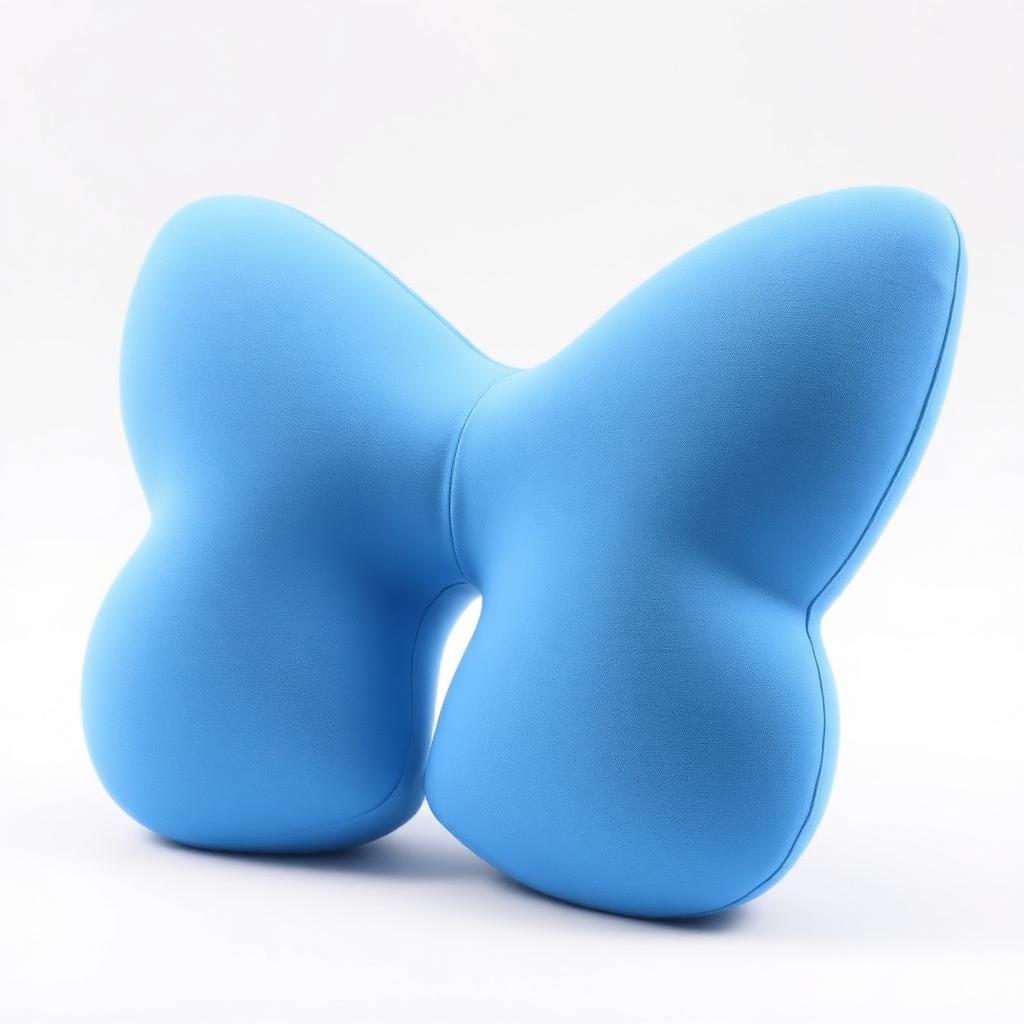
Derila · Cervical / contour
Derila Ergo Pillow
Butterfly-shaped memory foam pillow with a raised neck roll and arm cut-outs.
Sleep positions: Side, Back
Trial: 60-day return policy
Ships to United States
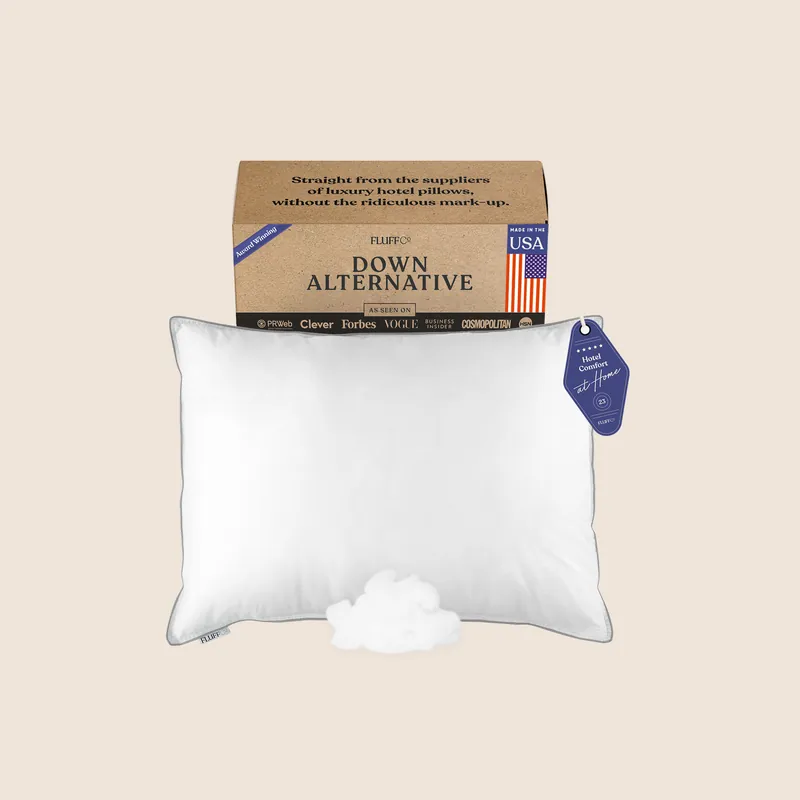
FluffCo · Down alternative
FluffCo Down Alternative Pillow
Hotel-style vegan pillow in Firm Fluff (side) or Soft Fluff (back/stomach).
Sleep positions: Side, Back, Stomach
Trial: 30-night trial
From $69 · price checked 2026-10-13
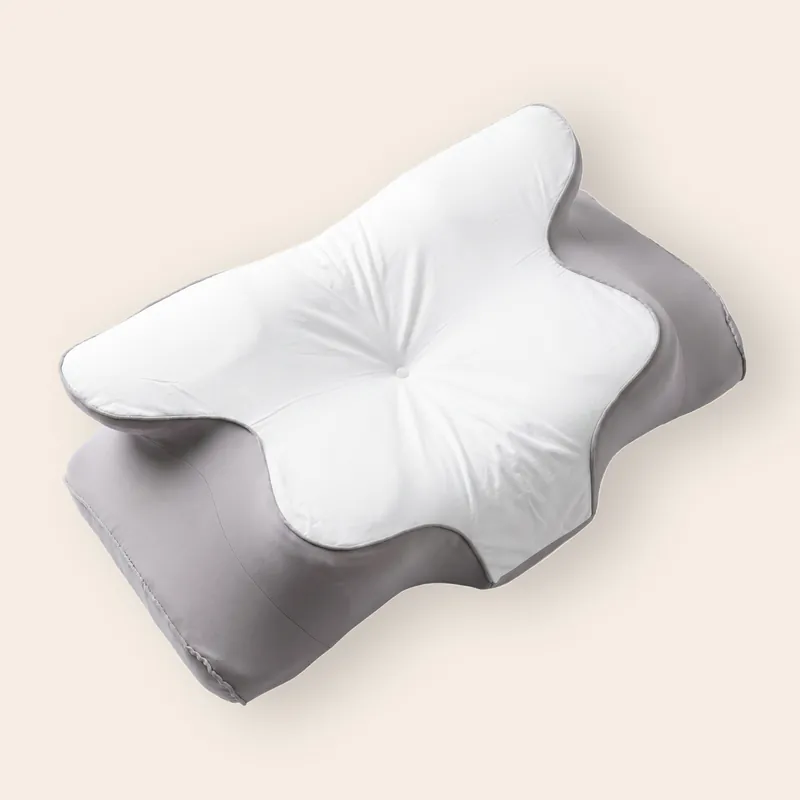
FluffCo · Cervical / contour
FluffCo Neck Pain Pillow
Butterfly-shaped ergonomic pillow with a premium cotton cover.
Sleep positions: Side, Back, Combination
Trial: 30-night trial
From $99 · price checked 2026-10-13
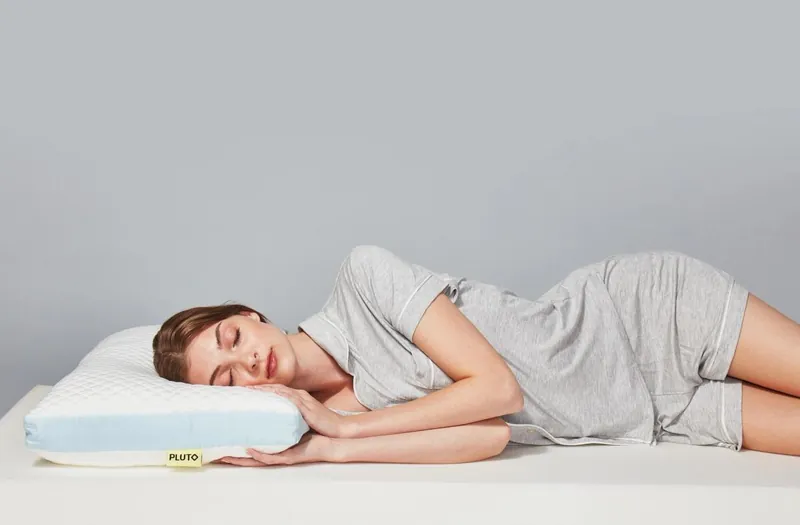
Pluto · Memory foam
Pluto Pillow
Built to order from a 3-minute sleep quiz — thickness from 2.5" to 12"+.
Sleep positions: Side, Back, Stomach, Combination
Trial: 125-night trial
From $149 · price checked 2026-10-13
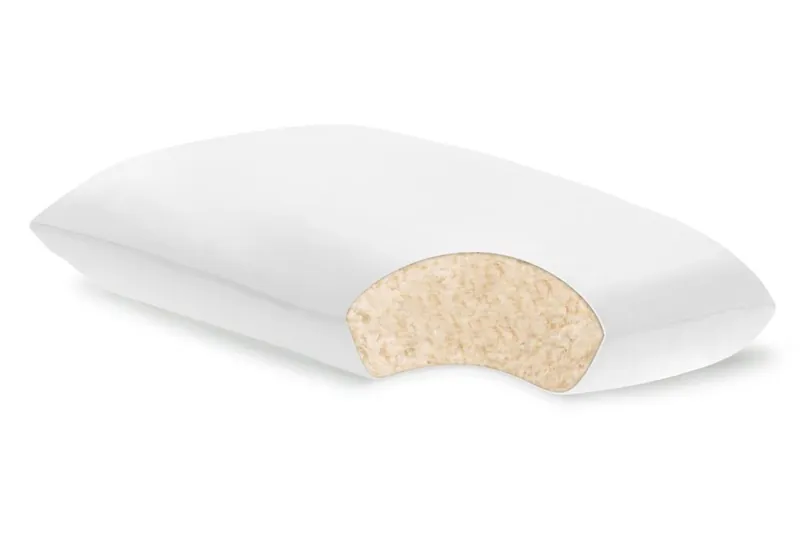
PlushBeds · Latex
PlushBeds Shredded Latex & Kapok Pillow
Organic shredded latex and kapok fill you can plump or compress.
Sleep positions: Side, Back
Trial: Not returnable
From $119 · price checked 2026-10-13
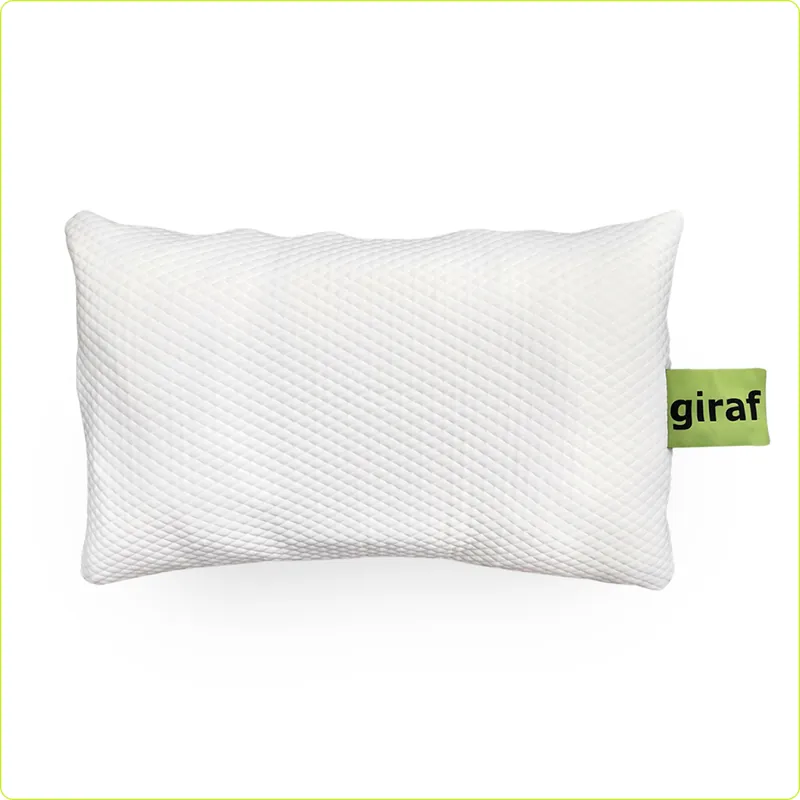
giraf · Deep pressure
giraf Cuddle Tech Sleeping Pillow
Composite 'deep pressure' pillow with replaceable wing capsules.
Sleep positions: Side, Back
Ships to United States
FAQ: Back Sleeper Pillow Questions Answered
Free PDF Guide
Get our free PDF: The Top 5 Pillows for Neck Pain 2026 — Compared & Ranked. Includes comparison charts, scoring breakdowns, and our buying checklist.
No spam. Unsubscribe anytime.