
The Quick Verdict: Our #1 Pick for Side Sleepers
On our research criteria, the Derila Ergo Pillow is our pick for side sleepers. It combines the exact specifications side sleepers need: a 13cm (5.1″) loft, contoured butterfly-wing design with shoulder relief, and firm-medium memory foam that maintains its shape without going rigid.
How to read this page
We haven't slept on these pillows ourselves. Our assessments come from manufacturer specifications, materials and certifications, sleep-trial and return terms, and verified owner feedback. Ratings are our research scores, not lab or sleep-test results. If a pillow has a sleep trial, that's the best way to find out whether it suits you.
Our Top 5 Ranked Pillows for Side Sleepers 2026
| Pillow | Best For | Loft | Firmness | Shoulder Support | Price | Rating |
|---|---|---|---|---|---|---|
| Derila Ergo Pillow | Overall winner, neck pain | 13cm | Firm-Medium | Excellent | $$$ | ⭐⭐⭐⭐⭐ |
| Cloudpillo Plus | Enhanced loft, side sleepers | Adjustable | Adjustable | Very Good | $$ | ⭐⭐⭐⭐ |
| Purple Harmony Hybrid | Hot sleepers, pressure relief | ~12cm | Medium | Very Good | $$$ | ⭐⭐⭐⭐ |
| Coop Home Goods | Adjustable height, value | Adjustable | Customisable | Good | $$ | ⭐⭐⭐⭐ |
| Layla Kapok Pillow | Budget-friendly, natural fill | ~10cm | Medium-Soft | Good | $$ | ⭐⭐⭐⭐ |
Why Your Side Sleeping Position Needs a Specific Pillow
Side sleeping is biomechanically superior to stomach sleeping for most people. When you sleep on your side, you naturally:
- May significantly reduce acid reflux compared to back sleeping (research from the American College of Gastroenterology supports left-side sleeping for GERD management)
- Improve spinal alignment when the pillow height matches the distance from your shoulder to your neck (typically 10–15cm for most adults)
- Research suggests side sleeping may reduce obstructive sleep apnea severity in mild-to-moderate cases (positional therapy)
- Decrease pressure on your lower back — physical therapists often recommend side sleeping for those with lumbar pain
But here's the problem many side sleepers face: they use a pillow that wasn't designed for their sleeping position.
The Shoulder Gap Problem
When you lie on your side, your shoulder creates a natural gap between your head and the mattress. If your pillow is too thin, your head drops toward your shoulder, creating an angle that stresses the cervical spine.
A standard pillow designed for back sleepers is typically 8–10cm high. For side sleepers, this is often too thin. Your cervical spine ends up hyperflexed (bent too far), which:
- Compresses the trapezius muscle over 6–8 hours
- Creates trigger points that radiate pain into your shoulder blade and arm
- Causes morning stiffness in your neck
- Contributes to tension headaches
The principle is simple: a pillow whose loft matches your shoulder gap keeps your head level with your spine, which is why loft is the first thing to check when choosing a side-sleeper pillow.
The Shoulder Pressure Trap
Your shoulder is a ball-and-socket joint that's less stable than a hinge joint like your knee. When you sleep on your side, your shoulder experiences front-to-back loading, rotational stress from arm weight, and compression forces from the mattress.
Standard flat pillows offer zero accommodation for this. They provide a flat surface that doesn't account for the contoured shape of your shoulder. Pillows with a dedicated shoulder channel or contour (like the Derila Ergo's butterfly-wing design) help distribute this pressure more evenly, which is why they generally suit side sleepers better than flat alternatives.
The 6 Non-Negotiable Features for Side Sleeper Pillows
1. Loft Height of 10–15cm (Sweet Spot: 12–14cm)
Your loft height should approximately equal the distance from the top of your shoulder to the side of your neck. For most adults, this is 10–15cm.
- 9cm and below: Usually too low for side sleeping: the head tilts down toward the shoulder, a common cause of morning neck stiffness
- 10–12cm: Good for petite frames and those who prefer softer support
- 13–15cm: Ideal for average to tall-framed adults and those with shoulder pain
- Above 15cm: Too high for most side sleepers, creating a downward angle into the shoulder
The Derila Ergo's 13cm loft sits right in the sweet spot for average-framed side sleepers, which is why it scores highest on our research criteria.
2. Contoured Shoulder Channel or Relief Zone
Important for side sleepers with any shoulder sensitivity. The best pillows feature a recess or contour where your shoulder naturally sits, providing softer material in the shoulder zone while maintaining firm support in the neck and head zone.
Pillows with dedicated shoulder accommodation (like the Derila Ergo's butterfly contour) are designed to reduce shoulder pressure compared with flat-topped designs, and owner feedback tends to reflect this.
3. Medium to Firm-Medium Density
Memory foam density directly correlates with support quality and durability:
- Very low density foam: Too soft. Collapses quickly and doesn't maintain head support over time.
- Medium density (firm-medium): The sweet spot. Provides support while allowing some conforming to your head shape. Maintains shape over months.
- Very high density foam: Too firm for many sleepers. Can create pressure hotspots rather than relieving them.
The Derila Ergo uses high-density 100% polyurethane memory foam (~950g core) designed to hold its shape. Lower-density foams generally lose height sooner.
4. Breathable Cover
Side sleepers tend to sleep warmer because one side of the face is pressed into the pillow, reducing airflow. A breathable cover material helps dissipate heat.
The Derila Ergo features a 90% Nylon / 10% Spandex top cover with breathable polyester mesh on the bottom and sides. Note that while the cover is breathable, the solid high-density memory foam core may retain some warmth — this is typical of all solid memory foam pillows.
If you run particularly hot, consider an adjustable shredded-foam option (like the Cloudpillo Plus) which allows more internal airflow.
5. Shape Retention Over Time
A pillow that loses its shape quickly is poor value. We evaluated each pillow's ability to maintain loft and recover from compression:
- Derila Ergo: High-density foam designed for good shape retention
- Quality competitors: Good retention with slightly slower recovery from compression
- Budget pillows: Noticeable loft loss and slower recovery, with some showing permanent deformation
6. Appropriate Firmness for Your Sleep Position
The best side sleeper pillows provide firm support for the head and neck while offering some give in the shoulder area. Single-density pillows that are the same firmness throughout tend to create the "twisted-neck feeling" that side sleepers often complain about.
The Derila Ergo's butterfly contour design naturally creates different support zones — firmer where the head and neck rest, with relief where the shoulder sits.
How We Assess Side Sleeper Pillows
We haven't sleep-tested these pillows. We compare them on published specifications, materials and certifications, sleep-trial and warranty terms, and patterns in verified owner feedback.
What We Evaluated
- Firmness and loft height vs. typical shoulder widths
- Shape: shoulder relief, contour or adjustable fill
- Materials and cooling features
- Foam density and expected shape retention
- Sleep trial, returns and warranty
- Consistent themes in verified owner feedback
Scoring Methodology
Each pillow gets a research score out of 100 across 8 categories:
| Category | Points |
|---|---|
| Owner-Reported Comfort | 15 |
| Neck Support | 20 |
| Shoulder Support | 20 |
| Pressure Distribution | 15 |
| Durability | 10 |
| Breathability | 10 |
| Value | 5 |
| Trial & Warranty | 5 |
For full details, see How We Research Pillows.
The Complete Ranked List: Best Pillows for Side Sleepers 2026
#1: Derila Ergo Pillow — Our Top Pick
Best For: Side sleepers with neck pain, shoulder pain, or anyone wanting the best contoured support
Why It Wins:
- Loft Height: 13cm (5.1″) — sits in the ideal range for average-framed adults
- Butterfly Contour: Raised lateral wings for side sleepers with a central depression for back sleepers
- Foam: High-density 100% polyurethane memory foam (~950g core) that holds its shape
- Cover: 90% Nylon / 10% Spandex top; 100% Polyester breathable mesh bottom/sides
- Dimensions: 54 × 36 × 13 cm — compact/travel-friendly (smaller than a standard Queen pillow)
What Owners Commonly Report:
- Less morning neck stiffness, most often from side sleepers with average shoulder widths
- An adjustment period of a few nights for people moving from flat or fibre pillows
- That it is smaller than a standard pillow
Honest Cons:
- Premium price point
- Takes 2–3 nights to adjust (not immediately comfortable for everyone)
- Arrives vacuum-sealed — allow 6–8 hours (up to 24h) for full expansion
- Compact dimensions may feel small if you're used to a full-size pillow
- Solid memory foam core may retain some warmth (typical of all solid foam pillows)
#2: Cloudpillo Plus — Best Adjustable Option for Side Sleepers
Best For: Side sleepers who want adjustable loft and a cooler sleeping experience
- Adjustable Loft: Remove or add shredded foam to dial in your exact height
- Dimensions: 40 × 80 cm — larger footprint than the Derila Ergo
- Dual-sided cover: Ice Silk cooling side for warm sleepers, cosy side for cool nights
- Trial: 100-night trial with 2-year warranty
Honest Cons:
- Shredded foam doesn't provide the same contoured shoulder relief as a molded pillow
- Requires initial setup time to adjust fill to your preference
- Ice Silk cooling effect can diminish with a thick pillowcase
#3: Purple Harmony Hybrid — Best for Hot Sleepers
Best For: Hot sleepers who want cooling technology plus side sleeper support
- Loft Height: Available in multiple heights — choose the tall option for side sleeping
- Gel-flex grid top layer provides a genuinely cool-to-touch surface
- Hybrid construction provides both conforming and support
Honest Cons:
- Gel layer can feel unusual on first use (very different texture from memory foam)
- Higher price point
- Not a contoured design — less shoulder-specific relief than the Derila Ergo
#4: Coop Home Goods Original — Best Budget Adjustable
Best For: Budget-conscious side sleepers who want adjustability
- Adjustable Loft: Add or remove shredded memory foam/microfibre fill to customise height
- Price: More affordable than premium contoured options
- Good long-term durability
Honest Cons:
- Shredded fill can shift during the night, creating uneven support
- Less contouring than dedicated ergonomic designs
- Requires periodic fluffing and fill adjustment
#5: Layla Kapok Pillow — Best Natural Fill Option
Best For: Sleepers who prefer natural materials over synthetic foam
- Fill: Kapok fibre and shredded memory foam blend
- Adjustable loft — remove fill to suit your sleeping position
- Copper-infused cover for antimicrobial properties
Honest Cons:
- Lower loft may be insufficient for taller side sleepers
- Less specialised shoulder support than contoured pillows
- Natural kapok fill compresses faster than pure memory foam
Why Side Sleepers Get Shoulder Pain (And How Your Pillow Fixes It)
Shoulder pain is one of the most common complaints from side sleepers (after neck stiffness). When you sleep on your side, your shoulder bears significant sustained load — your head weight, the lateral force from your body, and rotational stress from your arm weight — all for 6–8 hours.
Your shoulder is a ball-and-socket joint designed for movement, not static load-bearing. When a flat pillow doesn't accommodate your shoulder, this load concentrates into a pressure hotspot. Over hours, this causes soft tissue compression, reduced blood flow, and potential nerve irritation — leading to that sharp pain you feel when you first wake up.
If you switch to a better-fitted pillow, expect an adjustment period:
- The first few nights can feel unfamiliar as your body adapts to a new shape
- Give it at least one to two weeks before judging it
- Use the sleep trial: if discomfort persists, return it and try a different loft
The Derila Ergo addresses shoulder pain through its butterfly-wing contour (providing a natural recess for the shoulder), correct loft (maintaining proper shoulder-to-head height), and firm-medium density (allowing the shoulder to settle slightly into the pillow rather than resting on top of a flat surface).
The Neck Pain Shoulder Gap Explained
Neck pain is the #1 complaint from side sleepers. When you lie on your side, there's a gap between the top of your shoulder and the base of your skull. This gap must be filled by your pillow. If it isn't, your cervical spine drops into a hyperflexed position — essentially, your neck is bent forward as if you're checking your phone.
This shoulder gap varies by body size:
- Petite frames: typically 9–11cm
- Average frames: typically 12–14cm
- Taller frames: typically 14–16cm
How Loft Height Affects Cervical Alignment
The relationship between pillow loft and neck alignment is straightforward:
| Pillow Loft | Effect on Neck | Result |
|---|---|---|
| Too low (below shoulder gap) | Neck bends downward (hyperflexion) | Morning stiffness, trigger points, headaches |
| Correct height (matches shoulder gap) | Neck stays neutral/straight | Pain-free mornings, good alignment |
| Too high (above shoulder gap) | Neck bends upward (hyperextension) | Discomfort, potential nerve compression |
This is why matching your pillow loft to your shoulder gap is the single most important factor for side sleepers. The Derila Ergo's 13cm loft fits the average adult side sleeper well.
The "Arm Going Numb" Problem: What Causes It and How Pillow Choice Fixes It
When you sleep on your side with a pillow that's too soft or too low, your shoulder sinks deeper into the mattress. This increases the angle of your arm relative to your body, putting tension on the brachial plexus nerve bundle (which runs under your collarbone). Sustained tension over several hours causes nerve compression — the "dead arm" sensation.
The solution is straightforward: a pillow with the right loft keeps your shoulder elevated at the correct height, reducing the arm angle and relieving nerve tension. Many side sleepers who wake with arm numbness find a better-fitted loft helps; if numbness persists, speak to a doctor.
The Derila Ergo's combination of proper 13cm loft plus firm-medium support keeps the shoulder at the right height, which is designed to reduce the arm compression that causes numbness.
Side Sleeper Pillow Height Guide: Short vs. Average vs. Tall
Petite (Under 5'4")
Shoulder gap: typically 9–11cm
Best height: 10–11cm
Top pick: Cloudpillo Plus (adjustable) or Layla Kapok (lower loft)
Average (5'4"–5'10")
Shoulder gap: typically 12–14cm
Best height: 12–13cm
Top pick: Derila Ergo (13cm)
Tall (Above 5'10")
Shoulder gap: typically 14–16cm
Best height: 14–15cm
Top pick: Coop Home Goods (adjustable to your exact height)
Pro tip: If you're between sizes, go slightly higher rather than lower. A slightly high pillow is more comfortable long-term than one that lets your head drop toward your shoulder.
Best Pillow for Side Sleepers Who Run Hot
Side sleeping tends to run warmer than back sleeping because one side of your face is pressed into the pillow, reducing airflow. If you're a hot sleeper, temperature regulation is worth prioritising alongside loft and support.
Important to note: solid memory foam (like the Derila Ergo) tends to retain more heat than shredded foam or gel-based alternatives. The Derila's breathable cover helps, but it's still solid foam underneath. If temperature is your primary concern, consider alternatives with better airflow.
Our Top 3 for Hot Side Sleepers
- Purple Harmony Hybrid — Gel-flex grid provides genuinely cool-to-touch surface
- Cloudpillo Plus — Ice Silk cooling cover plus shredded foam allows more airflow than solid foam
- Coop Home Goods — Shredded fill with ventilation allows reasonable breathability
Side Sleeper Pillow for Couples (Different Needs, Same Bed)
If one partner is a side sleeper and one is a back sleeper, one pillow type doesn't work well for both. Side sleepers typically need 12–14cm loft with shoulder support; back sleepers need 8–10cm loft with neutral cervical alignment.
The solution: Get two different pillows suited to each person's sleeping position. Better sleep quality for both partners is worth the investment.
Our recommendation: For the side sleeper, the Derila Ergo is purpose-built. For the back sleeper, a simpler mid-loft pillow (8–10cm) without shoulder contouring works well. You don't need to spend the same amount on both.
How to Transition to Side Sleeping Using Pillow Placement
If you're switching to side sleeping for health reasons (acid reflux, sleep apnea, back pain), here's a gradual approach:
Week 1–2: Hybrid Positioning
Sleep primarily on your back, but place a pillow between your legs and slightly under your side. This gets your body used to the position without full commitment.
Week 3–4: Side Position, Part of the Night
Sleep on your side for part of the night, then rotate to your back when needed. Use a pillow that works reasonably for both positions during this transition.
Week 5+: Full Side Sleeping
Most people adapting to side sleeping are comfortable staying on their side most of the night by week 5. Expect 4–6 weeks for your body to fully adapt.
Making the Transition Easier
- Use a proper side sleeper pillow from day one — don't transition with a wrong-height pillow
- Use a body pillow between your legs for stability
- Expect 1–2 weeks of adjustment stiffness — this is normal
- Don't rush it — going full-time in week 1 leads to frustration and reverting
Free PDF Guide
Get our free PDF: The Top 5 Pillows for Neck Pain 2026 — Compared & Ranked. Includes comparison charts, scoring breakdowns, and our buying checklist.
No spam. Unsubscribe anytime.
Shop Side-Sleeper Pillows
Pillows that match this guide, with the ones sold in your country first. Shopping from 🇺🇸 United States.
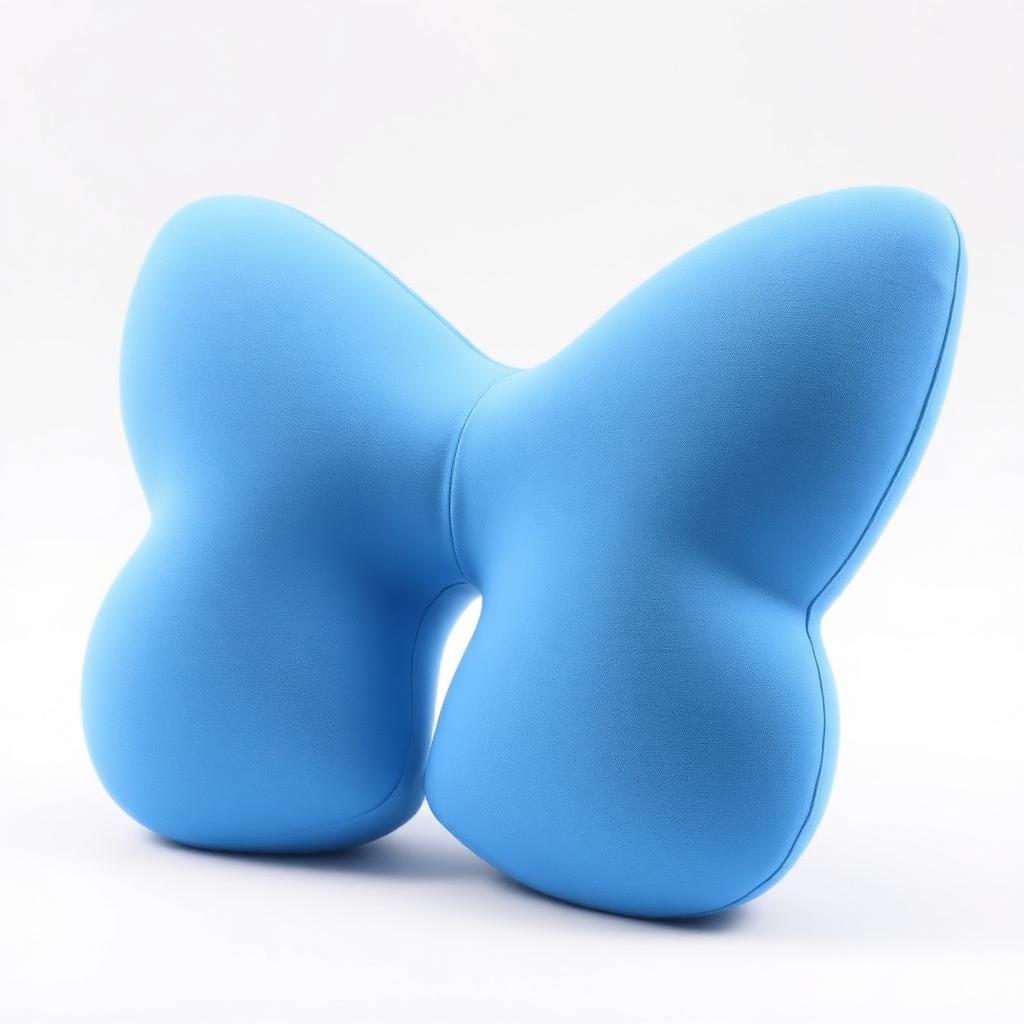
Derila · Cervical / contour
Derila Ergo Pillow
Butterfly-shaped memory foam pillow with a raised neck roll and arm cut-outs.
Sleep positions: Side, Back
Trial: 60-day return policy
Ships to United States
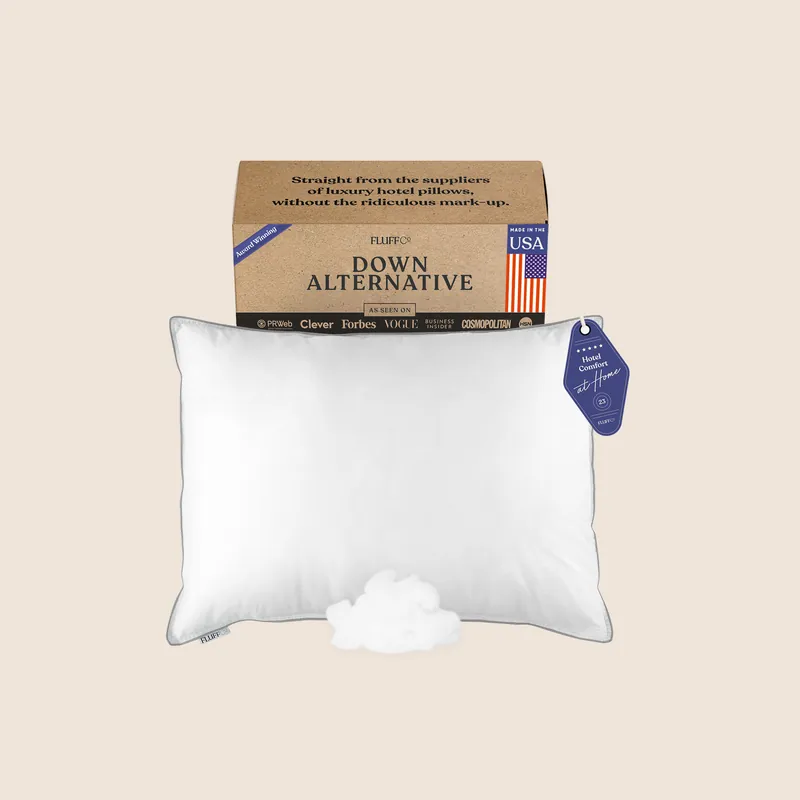
FluffCo · Down alternative
FluffCo Down Alternative Pillow
Hotel-style vegan pillow in Firm Fluff (side) or Soft Fluff (back/stomach).
Sleep positions: Side, Back, Stomach
Trial: 30-night trial
From $69 · price checked 2026-10-13
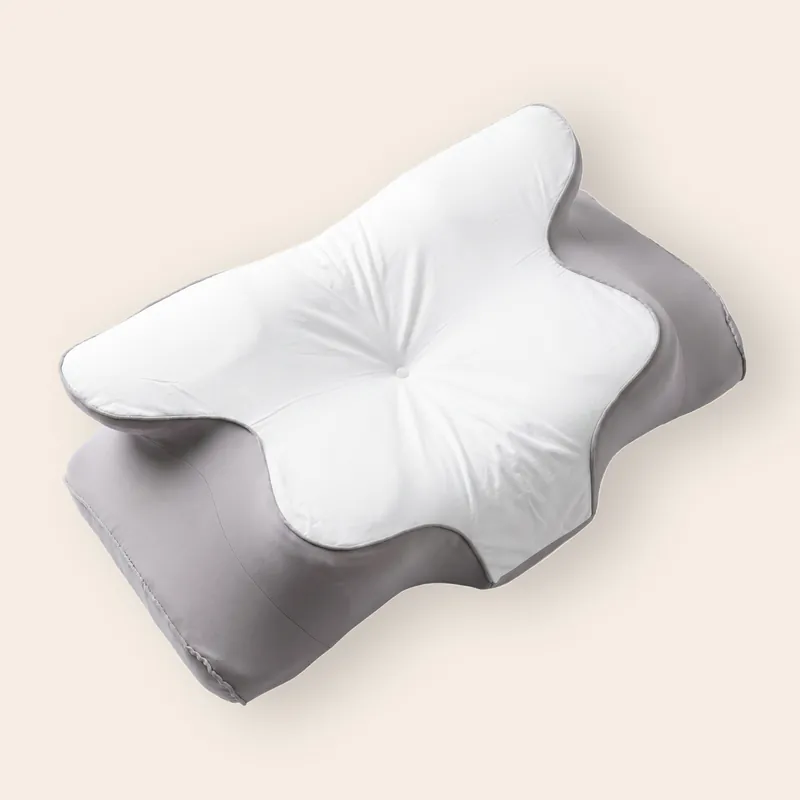
FluffCo · Cervical / contour
FluffCo Neck Pain Pillow
Butterfly-shaped ergonomic pillow with a premium cotton cover.
Sleep positions: Side, Back, Combination
Trial: 30-night trial
From $99 · price checked 2026-10-13
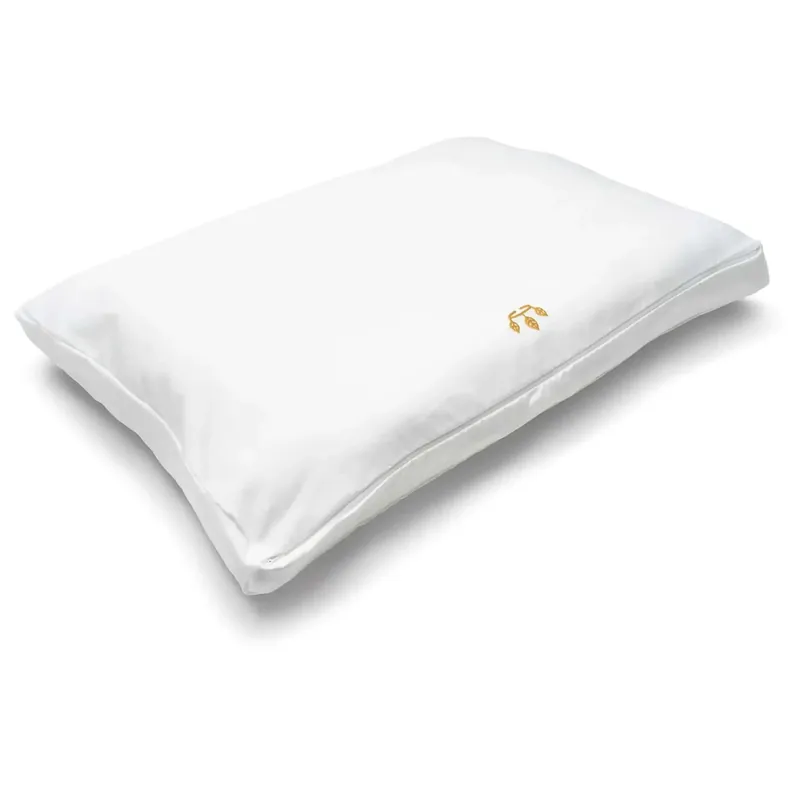
Noble Pillow · Adjustable fill
The Noble Head Pillow
Nine-channel pillow where neck, shoulder and head zones adjust independently.
Sleep positions: Side, Combination, Stomach
Trial: 45-day trial
From $299 · price checked 2026-10-13

Pluto · Memory foam
Pluto Pillow
Built to order from a 3-minute sleep quiz — thickness from 2.5" to 12"+.
Sleep positions: Side, Back, Stomach, Combination
Trial: 125-night trial
From $149 · price checked 2026-10-13
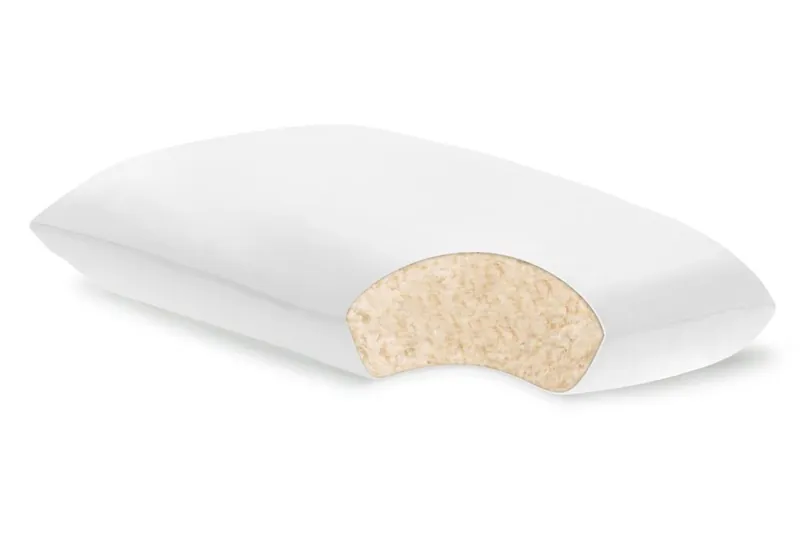
PlushBeds · Latex
PlushBeds Shredded Latex & Kapok Pillow
Organic shredded latex and kapok fill you can plump or compress.
Sleep positions: Side, Back
Trial: Not returnable
From $119 · price checked 2026-10-13
Frequently Asked Questions
Final Verdict: The Best Pillow for Side Sleepers Is the Derila Ergo
Weighing loft, shoulder relief, pressure distribution, temperature and durability, the Derila Ergo Pillow is our recommendation for side sleepers in 2026.
It's the only pillow on this page with a purpose-engineered butterfly contour for side sleeping. The 13cm loft, contoured shoulder relief, high-density memory foam, and breathable cover are specifically designed for the side sleeping position.
- Loft suited to average-framed side sleepers
- Butterfly contour with shoulder relief and arm cut-outs
- High-density memory foam designed to hold its shape
- 60-day return policy to try it at home
If you're on a tight budget, the Coop Home Goods is a solid adjustable alternative. If temperature is your top concern, the Purple Harmony or Cloudpillo Plus offer better airflow. But for dedicated side sleepers who want the best contoured support, the Derila Ergo is our top pick.